FIRST Place takes home a minimum of $350.
FOR CLASS CONTENT SCROLL DOWN
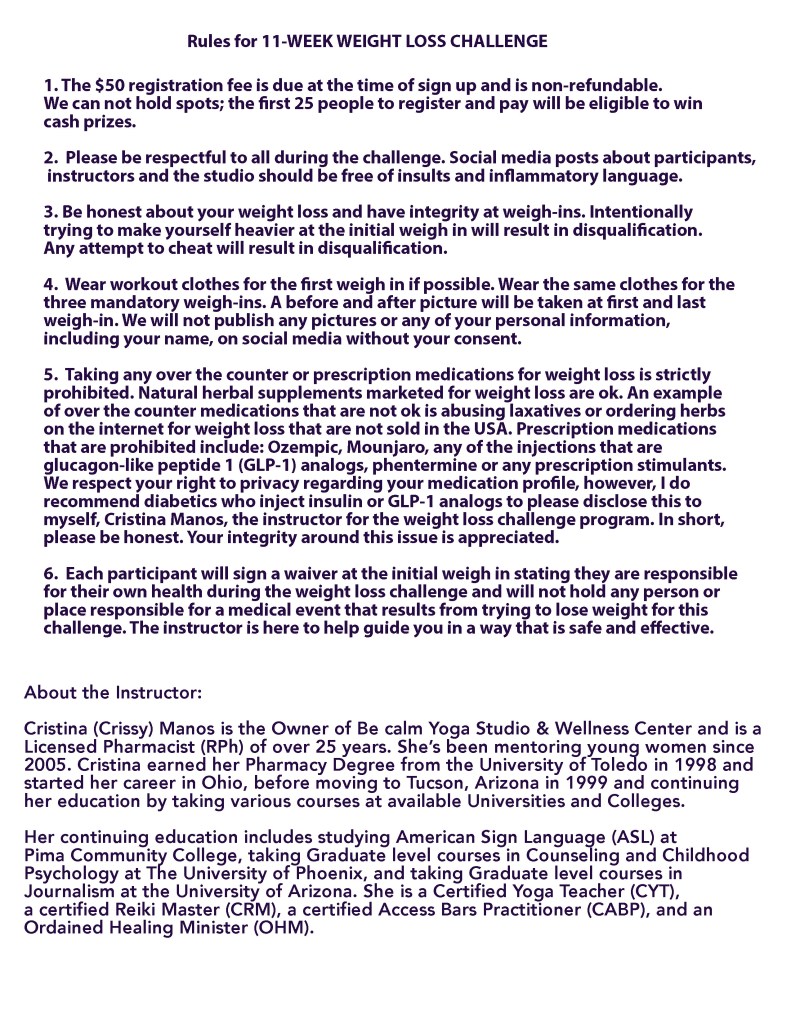
Weight loss is calculated by % of weight lost / % of BMI lost, and does not go by how many pounds were lost. So if someone needs to loose 80 pounds and you only need to lose 20 pounds, the calculation by % make the competition fair. See Class One below for info on how to calculate.
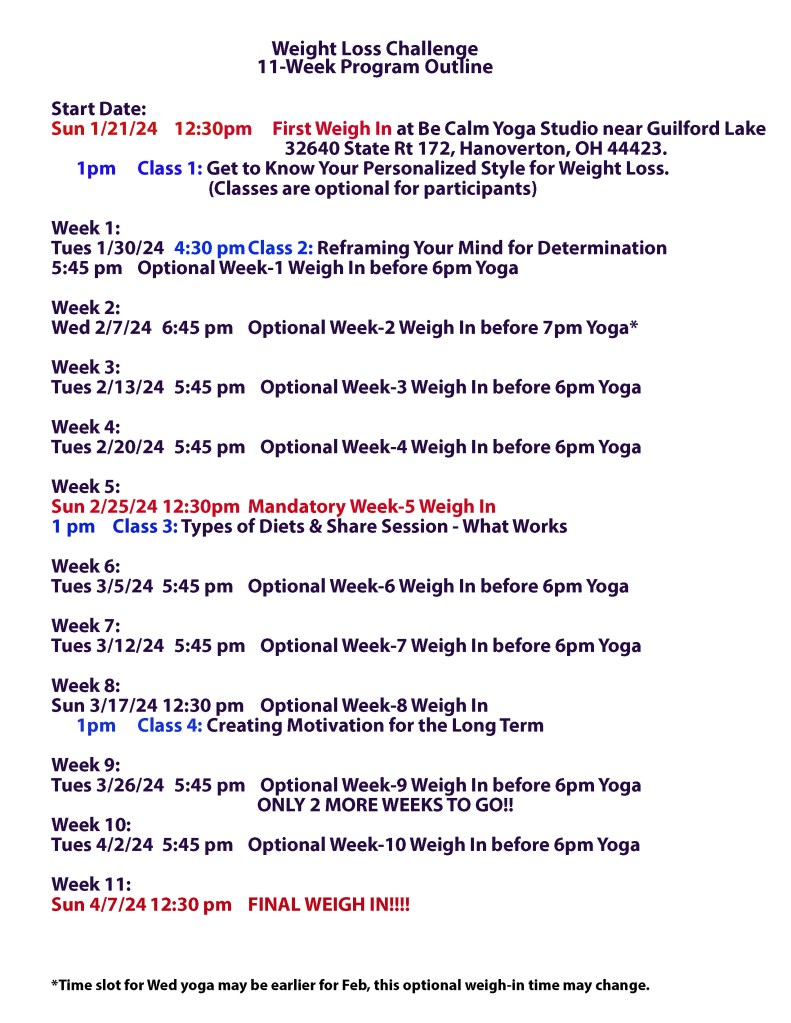
You must live in the area to be able to be physically present for the 1st Weigh In on January 21st, the Week-5 Weigh In on February 25th, and the Final Weigh In on April 7th.
Win Big by Losing the Most! Either way, the more you lose the more you win! You can’t go wrong!
The $50 Entry Fee gives you access to four educational classes (sharing sessions) during the 11 weeks on finding your best style, mindset, diet types and keeping motivation. Each participant gets one free yoga class. The $50 nonrefundable Entry Fee is due at the time of registration through Venmo, PayPal, email link or cash in person. Sorry no checks accepted.
First weigh in is 1/21/24 at 12:30pm at Be Calm Yoga Studio & Wellness Center. First offered class is 1/21/24 around 1 pm after the weigh in.
11-Week Outline
Rules for weight loss challenge

Class 1 Materials:
Get to Know Yourself
You know you best. What works for you? What has worked in the past? Start there.
Write down what works for you:
Write what doesn’t work:
Keep these past experiences in mind while taking a survey to identify what you’ve already tried, and what you might benefit from trying.
- Is it best for me to have one cheat day per week?
YES NO Not sure Probably Doubtful
- Does low carb work best for me?
YES NO Not sure Probably Doubtful
- Does low fat work best for me?
YES NO Not sure Probably Doubtful
- Does fasting work for me?
YES NO Not sure Probably Doubtful
- Does 5 or 6 small meals a day work best for me?
YES NO Not sure Probably Doubtful
- Does decreasing my portions work best for me?
YES NO Not sure Probably Doubtful
- Does a point system work best for me?
YES NO Not sure Probably Doubtful
- Does it help when I don’t eat past a certain time?
YES NO Not sure Probably Doubtful
- Does it help if I use a smaller plate?
YES NO Not sure Probably Doubtful
- Does it help if I ban certain foods on my cheat day?
YES NO Not sure Probably Doubtful
- Does it help if I increase my fiber intake?
YES NO Not sure Probably Doubtful
- Does it help if I use a probiotic?
YES NO Not sure Probably Doubtful
- Does it help if I lock up the junk food in my house?
YES NO Not sure Probably Doubtful
- Does it help if I decrease my alcohol intake?
YES NO Not sure Probably Doubtful
- Does it help if I batch cook?
YES NO Not sure Probably Doubtful
- Does it help if I increase my water intake?
YES NO Not sure Probably Doubtful
- Does it help if I increase my exercise?
YES NO Not sure Probably Doubtful
- Does it help if I take long walks several times a week?
YES NO Not sure Probably Doubtful
- Does it help if I go to a gym?
YES NO Not sure Probably Doubtful
- Does it help if I do yoga?
YES NO Not sure Probably Doubtful
- Does it help if I lift weights?
YES NO Not sure Probably Doubtful
- Does it help if I avoid restaurant food?
YES NO Not sure Probably Doubtful
- Does eating a big breakfast work best for me?
YES NO Not sure Probably Doubtful
Now think about & list rules you will probably keep:
List rules you probably won’t keep:
_______________________________________________________________
Additional Tips:
- Start slow, consider portion control as a first step.
- Eat slowly.
- Add lemon to your water.
- Enjoy your food.
- Think long term.
- Feel the energy of already having met your goal & focus on that feeling.
- Meditate.
- Sip bone broth
How to calculate your BMI:
If you are 5’5” tall (65 inches) and weigh 150 pounds:
150
——— X 703 = 24.958
652
Weight
———- X 703 = BMI
Height
The % of weight lost and the % of BMI lost should be the same and this metric will determine the winner.
If the 150 lb person mentioned above loses 18 pounds the calculation looks like:
150-18= 132 at final weigh in
132
—– X 100 = 88% weight retained. 100-88= 12% weight loss
150
By BMI:
New BMI: 132
—— X 703 = 21.963
652
21.963
———- X 100 = 88% BMI retained. 100-88= 12% BMI loss
24.958
Entry Survey
- On a scale from 1 to 5, with 5 being most energized, how much energy have you had since the beginning of this year until today?
1 2 3 4 5
- On a scale from 1 to 5, with 5 being most positive, how positive or negative have your thoughts been since the beginning of this year until today?
1 2 3 4 5
- On a scale from 1 to 5, with 5 being most positive, how positive or negative is your viewpoint of your physical body today?
1 2 3 4 5
- On a scale from 1 to 5, with 5 being very strong, how strong would you say your overall body is today?
1 2 3 4 5
- On a scale from 1 to 5, with 5 being the most inspired, how inspired are you today about losing weight and increasing your overall wellness?
1 2 3 4 5
- On a scale from 1 to 5, with 5 being the most likely, how likely are you to use wellness services alongside your diet plan, such as yoga, meditation, hiring a wellness coach, seeing a therapist, or taking a workshop?
1 2 3 4 5
- On a scale from 1 to 5, with 5 being the most likely, how likely are you to use your free yoga token to take a yoga class, and possibly return for more?
1 2 3 4 5
- On a scale from 1 to 5, with 5 being the most likely, how likely are you to keep the weight off after the 11-week challenge is over?
1 2 3 4 5
Class 2 content:
Reframing Your Mind
MINDSET is so important for everything we do in life. Working with the highest and most positive energies offered by our surroundings, will be rewarded with whatever outcome we focus on.
What we put into ourselves is what we get out of ourselves.
SELF-CARE is not the same thing as being selfish. We need time to restore our energy, we do need rest, we need alone time, and we need to give ourselves the love we aren’t getting from people or situations outside of us.
Being willing to change is the first step.
Write down a few things you have been willing to change in order to lose your goal weight by the end of the Weight Loss Challenge:
Now think about a few areas of your life that if you had the time, and no limitations of money or obligations, what would you love to see happen in these areas?
Think about what will happen if you stay the same and don’t make any changes. Write down a few of these ideas.
Now visualize all the positive outcomes of making the changes you want to make to lose weight. Write down the positive outcomes you will enjoy once you make these changes and stay with them.
NOTICE:
When we start to change a habit or take action steps to meet our next goal the paradox appears and the things that will hold us back come up for us. This is normal.
Example: When a person wants to quit smoking and plans to quit, it’s normal for them to feel a panic at not having the cigarettes anymore. They will typically smoke more before quitting just to get a last binge in, and then will typically move the quit date again and again.
This can happen with dieting too. A binge day can become an all-out sabotage for the body and mind with an outcome of a belly ache and anxiety.
We also tend to let our fears stop us in our tracks. If we stay in fearful thinking we keep creating that for our next moments. Some people are so afraid to try for fear of failure, they’re more comfortable with wherever their lifestyle takes them. We witness all the time people with cancer who still smoked until they passed on. We also witness people who die of old age who have smoked their entire adult lives and lived a fairly good quality of life.
Once we determine what is best for us, and we’re taking action steps to reach our idea of success or to meet our next goal, we aim to stay in positive thoughts and energy. We feel good about ourselves. When we make progress we feel proud of ourselves.
There will be challenges. Life will always have challenges. That’s ok.
With taking care of yourself, you’ll start to overcome them more easily. Just know that you can befriend your fears and not let them stop you from succeeding.
class 3 content
TYPES OF DIETS
Paleo: The diet of our ancestors. “The paleo diet is based on the premise of eating foods similar to those consumed by our ancestors during the Paleolithic era. It emphasizes whole, unprocessed foods such as lean meats, fish, fruits, vegetables, nuts, and seeds. The diet excludes grains, legumes, dairy products, processed foods, and added sugars. Advocates of the paleo diet believe that it promotes weight loss, improves digestion, and reduces inflammation.”
Mediterranean: The Mediterranean diet is inspired by the traditional eating patterns of countries bordering the Mediterranean Sea. It emphasizes whole foods such as fruits, vegetables, whole grains, legumes, nuts, seeds, olive oil, and lean proteins like fish and poultry. This diet limits the intake of processed foods, red meat, and refined sugars. The Mediterranean diet is known for its heart-healthy benefits and is associated with a reduced risk of chronic diseases. The basics: Limit red meat, increase consumption of fish, use healthy fats like olive oil. Positives: Proven effective for heart health. No calorie counting or food tracking. Few restrictions. Drawbacks and concerns: This is not actually a diet for weight loss, though many can drop extra pounds if they focus on the foods emphasized on the diet over empty-calorie processed foods and sugary drinks.
Keto: The ketogenic diet, or keto diet, is a low-carbohydrate, high-fat diet. It focuses on consuming high amounts of healthy fats, moderate protein, and very low carbohydrates. The goal of this diet is to enter a state of ketosis, where the body primarily uses fat for fuel instead of carbohydrates. The keto diet has gained popularity for its potential to promote weight loss and improve blood sugar control. However, it may not be suitable for everyone, and it requires careful planning and monitoring. Staying under 20 grams of carbohydrates a day is difficult. This diet emphasizes eating whole foods like meat and eggs, and avoiding whole foods like potatoes, carrots, beets and other root vegetables that have sugars and starch. Avoid most fruit, with exception of a few blueberries every once in a while. Leafy greens are encouraged for fiber. The basics: High fat, moderate protein, very low carb. Positives: The keto diet eliminates processed, empty-calorie staples like white breads, white rice and sugary drinks. Many followers experience fast weight loss, without having to give up fave foods like bacon and butter. Drawbacks and concerns: It eliminates many nutritious fruits and vegetables with a high carb count. Eating too much fat or too much protein can have an adverse effect on overall health. The list of foods you can eat on keto is limited and following the diet requires meticulously tracking every bite to keep to a 5% carb/10% protein/75% fat ratio for weight loss or maintenance. Though keto advocates often credit this way of eating with increasing their energy, many find that the lack of carbs leads to fatigue, especially in the first weeks of transitioning to the diet.
Lazy Keto: The basics: Very low-carb. Positives: While the ketogenic diet requires followers to keep track of the percentage of fat, protein and carbs they eat each day, lazy keto dieters focus only on keeping their carb count low.Drawbacks: The goal of the keto diet is to put the body into a state of ketosis so that it burns fat instead of carbohydrates. Lazy keto may not lead to ketosis.
Keto 2.0: The basics: Like keto, but with more carbs and less fat. Positives: On a traditional ketogenic diet, you are supposed to consume 75% fat, 10% protein and 5% carbs. Keto 2.0 adjusts that ratio to 50% fat, 30% protein and 20% carb. That higher carb percentage makes it easier to add fruits and vegetables that would blow up your carb count on traditional keto. Drawbacks and concerns: Still relatively restrictive. Requires tracking food.
Bulletproof Diet: The basics: A bit of keto, a bit of carb cycling, some intermittent fasting and a bunch of branded products, outlined in The Bulletproof Diet by Dave Asprey.Positives: Pumping up the carb count twice a week will counteract side effects like keto flu, constipation and lack of energy that can sometimes accompany a super low-carb diet. Drawbacks and concerns: Extremely restrictive food list. Can be costly when using the branded products that the diet calls for.
Vegan: The vegan diet is a plant-based diet that excludes all animal products, including meat, poultry, fish, dairy, eggs, and honey. Vegans rely on fruits, vegetables, legumes, whole grains, nuts, and seeds as their primary sources of nutrition. A well-planned vegan diet can provide all the necessary nutrients, including protein, iron, and calcium. It is often chosen for ethical, environmental, and health reasons. The vegan diet will not lead to weight loss unless another tactic is employed, For example, eating potatoes and bagels will not get you a smaller pant size. Vegan is an option for weight loss when combined with paleo style or low carb style eating.
Vegetarian: A vegetarian diet eliminates meat and fish but may include animal-derived products such as dairy and eggs. There are different types of vegetarian diets, including lacto-vegetarian (includes dairy), ovo-vegetarian (includes eggs), and lacto-ovo-vegetarian (includes both dairy and eggs). Vegetarian diets can provide a range of health benefits, including reduced risk of heart disease, type 2 diabetes, and certain cancers. Similar to the vegan diet, a vegetarian diet is not always ideal for weight loss unless combined with reasonable tips and eating habits like low carb or low fat. In other words, eating grilled cheese sandwiches with creamy potato soup every day isn’t a great diet plan for weight loss or for health.
Gluten Free: A gluten-free diet excludes the protein gluten, found in wheat, barley, and rye. This diet is essential for individuals with celiac disease, a severe gluten intolerance. It is also adopted by people with non-celiac gluten sensitivity. Gluten-free diets focus on naturally gluten-free foods like fruits, vegetables, gluten-free grains (e.g., rice, quinoa), legumes, nuts, and seeds. Care must be taken to ensure that gluten-free processed products are not overly processed or high in sugar and unhealthy fats. I recommend gluten free for every person. It’s a way to reduce inflammation and also helps you cut down on bread and pasta. The basics: Eliminate foods that contain gluten, a substance found in wheat and some other grains. Positives: Relieves symptoms of celiac disease and gluten intolerance. Drawbacks and concerns: Some people go gluten-free to lose weight, and while the change to a diet that eliminates many breads and grains may lead to weight loss for some, eliminating gluten in and of itself is not a method for weight loss. Worth noting: As the gluten-free trend grew in popularity, restaurants and grocery stores began including a variety of gluten-free products, making it easier for those with celiac disease and gluten intolerance to enjoy a variety of foods.
Atkins Diet: The basics: A four-phase plan, the diet starts out severely restricting carb consumption and gradually increases the amount allowed.Positives: Stresses nutrient-rich foods. Effective for weight loss. The original plan from Dr. Atkins’ New Diet Revolution by Dr. Robert Atkins has been updated to offer variations that meet individual needs and preferences. Drawbacks: Requires tracking carbs. Fairly restrictive, especially in the first phases. Some may find the diet difficult to follow long-term and may gain back lost weight as they reintroduce carbs, meaning this diet won’t work for everyone.
Whole30: The basics: Eat whole foods only—foods that are not processed or refined— for 30 days. Online, you can check out a list of Whole30-approved foods. Positives: Encourages followers to connect food choice to how they feel, so that even after the 30 days they may continue to focus on nutrient-rich, non-processed foods. Drawbacks: Restrictive, so it may be difficult to stick with, even for 30 days. Worth noting: While many diet plans offer substitutes for sweets or crunchy/salty snacks, Whole30 discourages faux treats even if they are made with approved ingredients.
Dubrow Diet: The basics: Low carb and intermittent fasting. Positives: Stresses nutrient-rich foods. Discourages processed foods. Drawbacks and concerns: The Dubrow Diet by Heather and Terry Dubrow focuses on appearance over health as the motivating force for the diet. The calorie counts for some forms of the diet may be too low for health improvement or weight loss. To implement this diet, you would look at low carb and intermittent fasting and create your own style with these tools. It’s just a combination of other diet plans.
Intermittent Fasting 5/2: The basics: Eat what you like for five consecutive days and stay under 500 calories for two consecutive days. Here’s a closer look at the science behind intermittent fasting. Positives: No food restrictions. Can be effective for weight loss if followed as detailed in The 5:2 Diet by Dr. Michael Mosley. Drawbacks and concerns: Some may find the two extremely low-calorie days difficult to get through. The lack of guidelines can lead to binging on unhealthy foods on non-fast days.
Intermittent Fasting 4/3 – alternating days: The basics: Eat normally every other day and stay under 500 calories every other day. Positives: Most people will find this pattern easier than fasting for two days in a row. This is a way to make intermittent fasting easier. Drawbacks and concerns: Some people will find the extreme low-calorie days difficult to get through.
Intermittent Fasting 16/8 hours: The basics: Fast for 16 hours, eat what you like during an eight-hour window each day. Positives: Includes the hours you are asleep, so may appeal to people who skip breakfast or tend to have a late breakfast. Drawbacks and concerns: Some people may overindulge during non-fast hours. You must stay hydrated.
Intermittent Fasting 20/4 hours: The basics: Fast for 16 hours, eat what you like during a four-hour window each day, preferably 3pm to 7pm. Positives: Includes the hours you are asleep, so may appeal to people who skip breakfast or tend to be busy and can wait to eat. Drawbacks and concerns: Some people may overindulge during non-fast hours. Eating more than 2000 calories in a 4-hour window is not going to promote healthy weight loss. You must stay hydrated and eat foods rich in fiber to avoid becoming constipated.
Intermittent Fasting Warrior: The basics: Don’t eat during the day. Eat a lot at night. Positives: Eliminates processed foods and sugary drinks. Concerns: This is an extreme diet that many will find difficult to stick with. Worth noting: The name references the ancient days of hunter/gatherers when days were spent tracking down food and nights spent feasting on the spoils. Detailed in The Warrior Diet by Ori Hofmekler.
One Meal a Day (OMAD): The basics: Exactly as described. You eat just one meal each day. Positives: Effective for weight loss. No specific food restrictions. Drawbacks and concerns: Not recommended for anyone with diabetes, pregnant women, children and those with a history of eating disorders. Could lead to unhealthy food binges. Difficult to stick to for most people. Worth noting: Though this diet doesn’t offer guidelines about which foods to eat or avoid, followers are supposed to use a standard dinner plate, and food should be no more than three inches high.
WW (Weight Watchers): The basics: A Weight Watchers membership program offers personalized meal plans, community support and accountability combine to encourage balanced eating and portion control. Positives: Some form of WW (formerly Weight Watchers) has been around for decades, and long-term studies show that it is effective for weight loss. It doesn’t restrict specific foods. Drawbacks and concerns: Can be costly. There is a tiered membership fee, with prices rising to gain access to additional benefits such as workshops and personal coaching.
DASH Diet: The basics: Low sodium, nutrient conscious Positives: Though designed specifically to prevent high blood pressure, DASH (Dietary Approaches to Stop Hypertension) emphasizes healthy choices in all food groups (yes, even carbs!) and can have a positive effect on people with other health conditions. Drawbacks and concerns: Eliminates beef and bacon, which may be hard for some people to give up completely. Worth noting: DASH was created by the National Institutes of Health, is recommended by numerous national health organizations and consistently ranks high among dietitians and physicians because it’s a diet that works for many.
1200 Calories a Day: The basics: It’s all in the name. Consume no more than 1200 calories a day Positives: Effective for weight loss. No restricted foods. Drawbacks and concerns: Focusing on calories alone may encourage unhealthy eating habits. Many people will feel hungry on a 1200-calorie diet.
MyPlate: The basics: USDA-approved plan that recommends portions in the five food groups, based on your weight and health goals. Positives: No food is restricted, but nutrient-rich foods are emphasized. Encourages gradual change to diet, making it easy to adopt. The MyPlate graphic that divides a plate into healthy portions of food groups is helpful for people learning how to create a balanced diet, Drawbacks and concerns: Taking the next step, with the more personalized MyPlate plan, requires tracking your food and calculating calories. The plan does not address sweets, alcohol or fats in its food groups.
Intuitive eating: The basics: Tune in to true hunger, recognize fullness and eat whatever you like. Positives: Removes the “diet mentality” that categorizes food as good or bad. Puts you in tune with your body. Drawbacks and concerns: Long and difficult learning process. Vague guidelines for achieving success.
Mindful eating: The basics: Pay close attention to every aspect of eating and your body’s response to food. Eat slowly and deliberately. Positives: Causes you to think before you eat and to recognize hunger and fullness. Eating slowly allows your brain to catch up with your body’s signals of fullness. Helps to identify emotional eating triggers. Drawbacks and concerns: Long and difficult learning process with few guidelines. Worth noting: It sounds like the opposite of intuitive eating, but mindfulness shares the same basic goal of understanding your body when it comes to hunger and fullness.
Clean eating: The basics: Avoid all foods with artificial ingredients. Stick to whole, natural foods only. Positives: Eliminates processed foods that can cause weight gain and health issues. Lowers consumption of sugar and salt. Drawbacks and concerns: This diet can be costly and time-consuming. Restrictive.
Mayo Clinic Diet: The basics: Low sugar, nutrient-dense foods. Positives: Emphasis on adding fruits and vegetables to meals. No calorie counting. Effective for weight loss. Drawbacks and concerns: After the initial phase, which restricts certain foods for two weeks; followers are expected to stick to eating healthy foods but have few restrictions. Some people may overdo it when reintroducing off-diet foods.
SuperCarb Diet: The basics: Balance protein (40%), complex carbs( 30%), and fat (30%) in every meal and snack Positives: Eliminates processed foods (called “carbage” by diet creator Bob Harper.) Emphasizes fiber-rich carbohydrates as part of a balanced diet. Effective for weight loss. Drawbacks and concerns: Specifies times of day when you can eat certain foods. Worth noting: Bob Harper wrote a book touting this diet after he suffered a heart attack.
Anti-Inflammatory Diet: The basics: Low sugar, emphasis on fish over meat, healthy oils and fats. Focused on reducing inflammation that may cause weight gain and health problems. Positives: Eliminates processed foods. Not too restrictive. Drawbacks and concerns: Some of the restricted foods may be difficult to give up. Goodbye coffee!
AIP (:Auto Immune Protocol): The basics: Similar to paleo and anti-inflammatory diets, with additional restrictions. Positives: Encourages eating more vegetables. Eliminates processed foods. May help people with chronic digestive issues such as irritable bowel syndrome and autoimmune diseases such as lupus and psoriasis, though there are no conclusive studies. Drawbacks and concerns: Extremely restrictive and so difficult to stick with long term. Worth noting: This diet was designed specifically to combat autoimmune disease symptoms.
Nutrisystem: The basics: Prepackaged meals delivered to your home, supplemented with fresh produce that Positives: Focused on portion control and foods low on the glycemic index. Easy to follow since meals are delivered right to you and you don’t have to track calories or macronutrients. Personalized meal plans based on answers to a quiz. Effective for weight loss. Drawbacks and concerns: Difficulty navigating meals away from home. Can be costly.
Jenny Craig: The basics: Prepackaged meals and weekly diet coaching.Positives: Easy to follow. Effective for weight loss. Encourages exercise as part of the plan. Help in transitioning to a healthy meal planning once you near your goal weight. Drawbacks: Difficulty navigating meals away from home. Can be costly.
South Beach Diet: The basics: Lean meats, low-glycemic carbs, unsaturated fats. Positives: Effective for long-term weight loss. No counting calories or macros. Offers a transition plan for healthy eating after reaching goal weight. A prepackaged meal delivery plan is available. Considered heart healthy. Drawbacks and concerns: Some may find the diet too restrictive. Worth noting: First published in 2005, The South Beach Diet by Dr. Arthur Agatson has an update, The New Keto-Friendly South Beach Diet.
80/20: The basics: Make healthy food choices 80% of the time, indulge 20% of the time. Positives: No food is completely restricted. Counteracts feelings of guilt about food, so the tendency toward binging is reduced. Drawbacks and concerns: Without keeping track of food, most people underestimate what they eat in a day. Easy to overdo the junk food.
MIND Diet: The basics: A combination of the Mediterranean and DASH diets designed to improve brain health and reduce the risk of Alzheimer’s. This is not intended as a weight-loss diet. Positives: This diet focuses on incorporating foods related to brain health, including leafy greens and berries. Easy to follow. Wine is part of the diet! Drawbacks and concerns: Vague guidelines and little research about its effectiveness.
Nordic Diet: The basics: Low glycemic index foods balanced with lean proteins, preferably locally produced and organic. Positives: Focuses on nutrient-dense whole foods. Environmentally friendly. No calorie counting. Effective for weight loss.Drawbacks and concerns: Can be costly. Shopping for local foods may be time consuming in some areas. Meal preparation can take an hour or more.
Optavia Diet: The basics: Five prepackaged meals/snacks a day, delivered to your home. Positives: Offers different plan options to suit personal preferences. Includes diet coaching to encourage long-term healthy food choices. Easy to follow. Drawbacks and concerns: Costly. Difficult to follow away from home.
Noom: The basics: Weight loss app that includes personal coaching and divides foods into a color system—green for high nutrient/low calorie, red for low nutrient/high calorie, yellow for in-between.
Pritikin Diet: The basics: Low fat, high fiber plan Positives: Eliminates most processed foods. Focused on satisfying hunger. Recommends regular exercise as part of the plan. Effective for weight loss. Heart healthy. Drawbacks and concerns: Restrictive. Difficulty eating away from home. Worth noting: Introduced in 1979 with The Pritiken Program for Diet and Exercise by Nathan Pritikin.
Body Type Diet: The basics: Structure your diet plan according to your body type—ectomorph (thin and lanky); mesomorph (medium frame, muscular or hourglass figure); endomorph (stocky or curvy).
Positives: All the plans focus on whole, nutrient-rich foods, differing only in the ratios of protein, carbohydrates and fats. The emphasis on body type could allow for more realistic expectations of what weight loss will achieve. Recommends regular exercise as part of the plan. Drawbacks and concerns: Some people have a body type that falls between these set categories.
Scandi Sense Diet: The basics: Use your hand as a measurement tool for how much to eat—two handfuls of vegetables; one handful of carbs, one handful of protein at each meal, plus one to three tablespoons of fat. Positives: No tracking calories or macronutrients. Easy to follow. Encourages portion control. Allows for “indulgences” such as alcohol or dessert. Drawbacks and concerns: Vague guidelines on how to incorporate indulgence foods.
GOLO Diet: The basics: Dietary supplements taken in conjunction with a balanced diet and regular exercise. GOLO claims that its supplements will spur weight loss by healing metabolic dysfunction. Positives: The diet plan emphasizes healthy foods and restricts processed foods and added sugars. Exercise is included as part of the plan. It is effective for weight loss, at a healthy rate of 1-2 pounds a week. Drawbacks and concerns: Costly. The scientific claims for the effectiveness of the supplement are disputed. The plan requires calculating numerous factors, explained in its guidebook, in order to determine what to eat.
Best Life Diet: The basics: A structured plan to phase in healthy food choices as you phase out less healthy foods. Created by Oprah Winfrey’s one-time trainer Bob Greene, as outlined in his book The Best Life Diet. Positives: The focus on making gradual changes to your diet increases the chance that you will stick with a healthier way of eating long term. Includes regular exercise as part of the plan. Drawbacks: Eating away from home may be difficult to navigate.
The French Diet: The basics: Eat like a French person—savor indulgent foods, but control portions. The concept was popularized by the book French Women Don’t Get Fat by Mireille Guiliano. Positives: You get to eat what you like, with the caveat that you eat it slowly, mindfully to fully enjoy it. Taking that time lets your brain get the signal that you are full before you overstuff yourself. Emphasizes fresh foods over processed foods. Drawbacks and concerns: It can be hard to find the time to have a leisurely meal three times a day.
Cabbage Soup Diet: The basics: Eat a lot of cabbage soup for one week, and not much else. Fad diet alert: If you can stick to eating mostly cabbage soup for one week, you may lose water weight due to the calorie restriction, but this is a temporary weight loss plan.
Five Bite Diet: The basics: Skip breakfast, eat what you like for lunch and dinner, but only five bites for each meal Fad diet alert: Extreme calorie reduction may lead to weight loss, but also to health issues, fatigue and lack of proper nutrition.
Soup Diet (multiple variations): The basics: Eat a hearty soup for at least one meal a day for a limited time to lose weight Positives: Emphasis on adding vegetables into the diet. Soup has been shown to be filling. Discourages processed foods and snacking. Drawbacks and concerns: Restrictive. Weight loss is short-term. Fad diet alert: Some variations of the diet promise extreme weight loss in a short period of time.
Apple Cider Vinegar Diet: The basics: Sip a few teaspoons or tablespoons of apple cider vinegar before each meal or add the vinegar into the meal (assumes that you are already eating a healthful diet). Positives: May have some health benefits, such as maintaining a good alkaline level in the body. Drawbacks and concerns: Undiluted apple cider vinegar can erode tooth enamel. May cause nausea. Vinegar may alter insulin levels, so this plan could be detrimental to people with diabetes. Fad diet alert: Claims for weight loss have not been backed by research.
Baby Food Diet: The basics: Eat baby food for breakfast and lunch (14 jars total), have a healthy dinner. Positives: Effective for weight loss. Baby food has lots of nutrients. Drawbacks and concerns: Baby food does not appeal to adult tastes. Adult nutrient requirements are different than infant requirements. Fad diet alert: You may lose weight if you can stick to this plan, but will likely regain it once you stop.
Hollywood Cookie Diet: The basics: Eat 4-6 of the branded Hollywood Cookies throughout the day instead of meals and snacks, then have a low-calorie dinner. Positives: Effective for short-term weight loss. Recommends consulting with a doctor before starting the diet. Drawbacks and concerns: Expensive. Low in vital nutrients. Not a long-term diet plan. Fad diet alert: Requires buying the branded product to do the diet. Promises dramatic results.
Hard Boiled Egg Diet: The basics: Eat two to three eggs a day, or eggs at every meal, rounded out with lean proteins and low-carb fruits and vegetables. Positives: Eggs are a low-calorie source of protein. Effective for weight loss. Drawbacks and concerns: Extremely low-calorie. May cause fatigue and lack of energy. Low in fiber. Fad diet alert: Claims you may be able to lose 25 pounds in two weeks.
Eco Atkins:The basics: Atkins for vegetarians. Positives: One study showed a greater reduction in “bad” LDL cholesterol among Eco Atkins dieters compared to regular Atkins adherents and vegetarians. The diet offers an alternative to vegetarians and vegans who tend to bulk up their meals with carbs like bread, rice and potatoes.Drawbacks and concerns: You’ll need to supplement the diet with a daily vitamin and fish or flax oil.
Pegan Diet: The basics: Combines elements of the paleo and vegan diets. Positives: Less restrictive than either paleo or vegan, this hybrid plan still maintains many of those diets’ health benefits. Drawbacks and concerns: Beans and dairy, two food groups that provide important nutrients, are not allowed on the diet.
Pescatarian: The basics: Vegetarian, plus fish and seafood Positives: The omega-3 fatty acid in fish is good for your health. People who eat fish regularly have a lower risk of heart attack. A vegetable-heavy diet is associated with a lower risk of heart disease. One study indicated the diet protects against colorectal cancers. Drawbacks and concerns: Almost all fish have some mercury content, which can be harmful. When including fish as your main source of protein, be sure to favor types that are low in mercury, such as canned light tuna, salmon and catfish. This is particularly true for children, pregnant women and nursing mothers.
Macrobiotic Diet: The basics: Whole grains and cooked vegetables. Designed to be part of a lifestyle dedicated to spiritual and physical wellness. Positives: Eliminates sugary foods and drinks. Drawbacks and concerns: Extremely restrictive. Some may find the food too bland. Specifies the cooking methods and cookware material to be used.
Alkaline Diet: The basics: Avoid acidic foods and eat to keep your body’s pH levels in balance. Positives: Makes fresh vegetables a significant portion of each meal. No tracking of calories or macronutrients. Drawbacks and concerns: Extremely restrictive.
Flexitarian: The basics: Mostly vegetarian, but not opposed to the occasional meal with meat, poultry or fish. Positives: Encourages moderation, so it’s easy to stick with. Effective for weight loss. Heart healthy. Drawbacks and concerns: It can be difficult to strike the right balance of foods that deliver all the nutrients that you need for optimum health.
Volumetrics: The basics: If you eat low-calorie, high-volume foods you will feel satisfied and avoid overeating. The diet is described in the book Volumetrics by Barbara Rolls and Robert Barnett. Positives: Effective for long-term weight loss. Designed specifically to fight hunger despite lower calorie consumption. Encourages exercise as a component for success. Drawbacks and concerns: Not for the veggie hater. Meal prep may be time-consuming.
22 Days Vegan: The basics: Eat fresh, non-processed plant foods for 22 days. (Beyonce does this!) Positives: Encourages adopting healthy, whole foods that you may incorporate into your regular diet once this plan ends. Encourages regular exercise. May be effective for weight loss. Drawbacks and concerns: Not intended as a long-term diet plan, so old eating habits are likely to return after the diet and lead to regaining weight lost. The increase in fiber may cause belly problems like constipation.
Fruitarian: The basics: Eat raw fruit. A lot of it. Make it 75% of what you eat. Positives: Fruit is good for you, with lots of vitamins. Everyone should be eating more fruit. Drawbacks and concerns: Fruit also contains sugar. Eating so much of it may lead to weight gain, tooth decay and spiked blood sugar. Fruitarianism is an extreme diet, overly restrictive and therefore hard to stick with. It can leave you deficient in important nutrients.
Ornish Diet: The basics: Low fat, vegetarian, whole food plan created by Dr. Dean Ornish for cardiac health, as outlined in his book, Dr. Dean Ornish’s Program for Reversing Heart Disease. Positives: No calorie counting or food tracking. Encourages regular exercise as part of the plan. Effective for weight loss. Drawbacks and concerns: Very low in healthy fats. May be difficult to follow.
Daniel Fast: The basics: 21-day Biblically-based plant-focused plan, accompanied by prayer, that’s intended to be spiritually cleansing. No meats, eggs or dairy. Positives: Emphasizes whole foods. Eliminates processed foods. Though restrictive, those restrictions are limited to three weeks. Drawbacks and concerns: Designed as a religious exercise, so it may not appeal to some people. Worth noting: The diet got attention when Chris Pratt announced that he was following it.
Rainbow Diet: The basics: Eat fruits or vegetables from eight different colors each day. Positives: Fun and pretty way to increase the consumption of fruits and vegetables, which provide vital nutrients with few calories. Drawbacks and concerns: The official Rainbow Diet recommends dietary supplements. Worth noting: There is an official Rainbow Diet book that involves taking a quiz to determine which foods and supplements are best for you. But you will also find general nutritional advice to bring the colors of the rainbow into your daily meals.
7-Day Color: The basics: Eat only one color each day, different colors each day. Positives: Encourages eating more fruits and vegetables, and may expand your diet to include foods you have not tried before. Drawbacks and concerns: May be time-consuming to plan the week’s meals. Difficult to stick with if eating away from home.
Raw Food: The basics: Whole, unprocessed foods, 75% of it uncooked. Positives: Encourages eating fruits and vegetables. Some nutrients in vegetables may be reduced by cooking. Drawbacks and concerns: Some foods can be dangerous when eaten raw. Extremely restrictive. Worth noting: While usually seen as a vegan or vegetarian plan, some followers also eat some meat, and some eat raw meat.
TB12 Method (Tom Brady diet plan): The basics: Mostly plant-based organic foods, with restrictions on certain food combinations and eating times. Positives: Emphasizes nutrient-rich vegetables and fruits, whole grains and nuts. Heart healthy. Encourages drinking water. Drawbacks and concerns: Extremely restrictive. Dietary supplements are suggested. Can be costly. Worth noting: The diet plan is just one part of a program for athletic fitness that Tom Brady writes about in The TB12 Method.
Engine 2 Diet: The basics: Vegan, with additional restrictions Positives: Effective for weight loss. Emphasizes whole foods and vegetables. Encourages regular exercise as part of the plan. Satisfies hunger. Drawbacks and concerns: Time intensive. Restrictive. Worth noting: The Engine 2 Diet was created by firefighter Rip Esselstyn to improve the cholesterol levels of his colleagues.
Eat to Live (Nutritarian): The basics: A six-week vegan, gluten-free diet plan that focuses on nutrient-rich foods, laid out in Eat to Live by Dr. Joel Fuhrman. Positives: No calorie counting. Effective for weight loss. Cuts processed foods and added sugars. Drawbacks and concerns: Fairly restrictive. Meal prep can be time-consuming.
Asian Heritage Diet: The basics: A food diet pyramid based on commonly used ingredients and preparations found in a variety of traditional Asian cooking. Positives: Vegetables are the main focus of meals, with meats used sparingly as a garnish. Advises starting a meal with soup, a low-calorie, nutrient-rich way to fill up. Aligns with a way of eating that is familiar and comforting to a large number of people. Emphasizes eating mindfully. Drawbacks and concerns: Ingredients may be difficult to find in some areas. Meal prep can be time-consuming.
Military Diet (also known as the 3 Day Diet): The basics: Stick to a very low-calorie meal plan for three days, followed by four days of healthy foods of your choice, staying under 1500 calories. Positives: May be effective for short-term weight loss. Drawbacks and concerns: Claims that following this diet can help you lose 10 pounds in one week are overblown. Some people may see those dramatic results as a result of the drastic reduction in calories, but it is almost certain to be water weight rather than fat loss. Worth noting: Despite its name, this diet has no connection to the military.
Master Cleanse (Lemonade Diet): The basics: 10-40 days lemon/maple syrup/cayenne pepper juice fast Positives: Severe calorie restriction makes it effective for weight loss. Includes phase-in and phase-out plans to ease the fasting effects on the body. Drawbacks and concerns: Extreme diet. No food. Not enough nutrients. Not recommended for women who are pregnant or nursing. Worth noting: This is an extreme form of dieting and you should consult your doctor before trying it.
Juice Cleanse: The basics: For 3 days to two weeks, don’t eat solid food. Drink specially formulated juices or smoothies instead. There are multiple versions of the juice fast, using either commercial products or home recipes. Positives: Juice fasting is often done as part of a larger focus on wellness that can include meditation, rest and mindfulness that can reduce stress. Drawbacks and concerns: You may not get enough nutrients. Fruit in juice form is high in sugar. May be detrimental to your health.
Blood Type Diet: The basics: Choose foods based on your blood type: O—high protein; A—no meat; B—avoid chicken, tomatoes, peanuts and some grains; AB—eat seafood, tofu, dairy and green vegetables. Avoid alcohol and cured meats.Positives: Eliminates empty-calorie processed foods across the board. Requires some form of exercise in addition to diet. Drawbacks and concerns: Choosing foods according to blood type does not factor in specific health conditions like diabetes or heart disease. There is no research that shows a connection between blood type and diet.
Zone Diet: The basics: 40% carbs, 30% fat, 30% protein. Positives: Eliminates processed and sugary foods. Followers can use a simple-to-follow “hand/eye method” to determine the correct portions of each food group rather than tracking macronutrients or calories. Drawbacks and concerns: Supplements are recommended. Reaching “The Zone” is measured in three blood values, which require blood tests. Worth noting: The Zone diet was introduced in 1995 with Enter the Zone by Dr. Barry Sears, and is based on the theory that chronic inflammation is a cause of weight gain and health issues, a concept that drives many current diet philosophies.
5-Factor Diet: The basics: Eat five meals made up of five food groups each day, as detailed in The 5-Factor Diet by Harley Pasternak. Positives: Promotes a variety of healthy foods in all food groups. Created to avoid hunger pangs.. Allows for one “cheat day” per week to indulge in off-diet foods, so discourages binging. Requires exercise as part of the plan. Drawbacks and concerns: Having every meal include foods from five food groups can make planning for the diet overly complicated and time-consuming.
Low-FODMAP: The basics: For people who suffer from chronic digestive issues. Eliminate high FODMAP (Fermentable Oligosaccharides, Disaccharides, monosaccharides and Polyols) foods, then reintroduce one at a time to determine reactions. Positives: Improves symptoms of IBS and other digestive problems. Drawbacks and concerns: Most effective when you work with a registered dietitian to identify problem foods. Worth noting: This is not a weight loss plan.
Sirtfood Diet: The basics: Three-week long, low-calorie plan with an emphasis on foods that are high in sirtuins, a group of proteins that have been shown to affect metabolism and inflammation. Detailed in The Sirtfood Diet by Aidan Goggins and Glen Matten. Positives: “Sirt” foods are high in nutrients. Dark chocolate and wine are allowed. Drawbacks and concerns: One of the requirements of the diet is a green juice that can be time-consuming to make and become monotonous. Not shown to be effective for long-term weight loss. Worth noting: Rumor has it Adele followed this diet to lose more than 100 pounds.
The Biggest Loser Diet (original): The basics: 4 servings of fruits and vegetables,3 servings of lean protein, 2 servings of grains, 200 calories of “extras.” Plus an intensive workout schedule. Positives: Effective for weight loss. Emphasizes nutrient-rich foods. Encourages regular exercise. Drawbacks and concerns: Low-calorie counts plus intense exercise may cause fatigue. Worth noting: A New York Times article that followed up with contestants from The Biggest Loser showed that most gained much of the weight back. A new version of the show has a different diet emphasis and trainer Bob Harper has a new diet plan.
SlimFast: The basics: Twice a day SlimFast meal replacements (shake, smoothie or bar), one balanced meal of no more than 500-600 calories. Positives: Effective for weight loss short term. Easy to follow. Drawbacks: Hunger. Not a long-term diet plan. Monotony.
Disassociated Diet: The basics: Eat carbs separately from fats and proteins. Popularized by actress Suzanne Somers in numerous books, including Eat Great, Lose Weight. Positives: Eliminates processed foods. Effective for weight loss. Drawbacks and concerns: Extremely restrictive, not only in what you eat but in how you eat it. The science behind the claims is controversial.
The Carnivore Diet: The basics: Eat meat, fish, eggs and some dairy. Positives: Eliminates high-calorie, low-nutrient foods and sugars. Drawbacks and concerns: Not a balanced diet. Extremely restrictive. Eliminates foods that provide necessary nutrients and fiber. High in fat and cholesterol.
Taco Cleanse: The basics: Eat vegan tacos for every meal. Positives: Encourages meal planning. Focuses on whole foods. May introduce new healthful ingredients into your diet. Drawbacks and concerns: Even with a variety of taco recipes, the plan still focuses on just one kind of food, so it can get boring. Worth noting: While The Taco Cleanse by Wes Allison and Stephanie Bogdanich does not claim that the diet encourages weight loss, the authors humorously promise it will change your life. And yes, you will find some healthy recipes that you can incorporate into a long-term healthy eating plan.
Sugar Detox: The basics: Cut sugar out of your diet completely for three days, including foods with naturally occurring sugars, such as fruit. Slowly add in foods with natural sugars. Positives: You’ll become more aware of which foods have added sugars as you start to read labels carefully. You will become more attuned to the natural sweetness in fruits so that they can satisfy your sweet tooth. Effective for weight loss. Numerous health benefits. Drawbacks and concerns: Initially, your body will experience sugar withdrawal symptoms that may include irritability, headaches or fatigue.
20/20 (Dr. Phil Diet): The basics: Four-phase plan based around 20 specific foods that require extra energy to break down, outlined in Dr. Phil McGraw’s book The 20/20 Diet. Positives: Offers strategies for following the diet despite obstacles. Stresses rethinking your relationship with food. Effective for weight loss. Drawbacks and concerns: Extremely structured and restrictive, particularly in the beginning phases. Meal prep is time-consuming.
Personalized Diet: The basics: Diet advice based on results of DNA or blood tests Positives: Allows for differences in each individual’s response to certain foods—not one size fits all dietary rules. Drawbacks and concerns: Lots of unknowns about this type of diet.
TLC Diet (Therapeutic Lifestyle Changes): The basics: Low fat, heart-healthy—focused on lowering cholesterol. Get the details. Positives: Emphasizes vegetables, fruits and whole grains. Encourages exercise as part of the plan. Drawbacks and concerns: Not a structured diet plan, so you will need to follow broad guidelines for this diet to work.
Vertical Diet: The basics: Primarily red meat and white rice—the diet was developed specifically for bodybuilders and athletes. Positives: The diet changes as your body changes to adjust to its different set of needs. It may aid in increasing muscle mass for those dedicated to intense workouts. Drawbacks and concerns: Extremely restrictive.
The Clean 20: The basics: Look up the list of 20 foods that you should eat over 20 day. Positives: Eliminates processed foods. Intended to change long-term eating habits. Includes regular exercise as part of the plan. Flexibility. Offers alternates for many of the foods on the list to account for personal taste or food allergies. Drawbacks and concerns: Meal prep may be time-consuming.
Hormone Diet: The basics: Sync hormones for weight loss through diet, exercise and nutritional supplements, as outlined in The Hormone Diet by Dr. Natasha Turner Positives: Eliminates processed foods and added sugars. Includes regular exercise and strength training as part of the plan. Drawbacks and concerns: Restrictive. Promotes quick, extreme weight loss.
Lectin-free: The basics: Eliminate foods that contain lectin, a plant protein that may be connected to inflammation in the body, as outlined in The Plant Paradox by Dr. Steven Gundry. Positives: Effective for weight loss. Drawbacks and concerns: Scientific claims are controversial. Lectins may be important to nutrient absorption. Eliminates many nutrient-rich vegetables and grains.
GM Diet: The basics: 7-day diet plan that limits you to a specific food on each day (fruits only on the first day; cooked vegetables only on the second and so on). Positives: No tracking calories or macros. Reduces sugar. Encourages eating more fruits and vegetables. May be effective for short-term weight loss. Drawbacks and concerns: Lacks important nutrients. Not a long-term diet plan. Worth noting: Though the diet has been attributed to a General Motors employee weight loss plan, there is no connection to the company. The plan’s origins are not known.
Glycemic Index: The basics: Choose foods that are low on the glycemic index, which measures how quickly foods are digested. Positives: This is more about food choice than a structured diet, so there are no restrictions. Encourages incorporating more low GI nutrient-rich vegetables and fruits into your meals and limits, but does not restrict higher GI foods. Drawbacks and concerns: You’ll need to learn or look up the glycemic index of the foods you eat, which may not always be easy.
Grapefruit Diet: The basics: A short-term quick weight loss plan that requires eating grapefruit or drinking grapefruit juice with every meal. Based on the theory that the enzymes in grapefruits will burn fat quickly. Positives: Grapefruit is high in vitamin C. Drawbacks and concerns: The science behind the theory is disputed. The severe calorie restriction (1000 calories a day) may lead to short-term weight loss, but the diet does not have a long-term impact on health or weight reduction.
M Diet (Mushroom diet): The basics: Replace one meal a day with a mushroom-forward meal. Positives: Mushrooms contain numerous important nutrients and can be filling. Easy to follow. No calorie counting. Drawbacks and concerns: One of the promises of the diet is that you can get rid of fat in your waist and thighs without losing it in your bust, but numerous studies show that diet is not effective for spot reduction.
Fast Metabolism Diet: The basics: By eating certain foods in a specific order for 28 days, you can speed up your metabolism for fast weight loss. Phase 1 focuses on high glycemic index foods, moderate protein and low-fat. Phase 2 transitions to high-protein, vegetable-heavy, low-carb and low-fat meals. Phase 3 is high in healthy fats and moderate in carbs and protein. Positives: You’ll incorporate lots of vegetables and healthy foods into your diet. Regular and varied exercise is included as part of the plan. Drawbacks: Complicated rules make it difficult to follow. The scientific claims outlined in the book, The Fast Metabolism Diet by Haylie Pomroy, are not proven.
Naturally Thin: The basics: Eat what you like but balance overindulging in calories in one place by cutting back elsewhere. Created by Real Housewife Bethenny Frankel and outlined in detail in her book Naturally Thin. Positives: Focused on portion control and whole foods rather than food restrictions. Emphasizes the importance of nutrient-rich vegetables. Drawbacks and concerns: Though it is billed as a non-diet diet, it does require you to be aware of the calories you take in.
REFERENCES:
https://parade.com/986848/nancy-henderson/types-of-diets
types of diets (Google)
 becalmyogastudio.com